- Medical automation equipment
- Automatic equipment for blood glucose test paper production
- Colloidal gold test paper production automation equipment
- Automatic filling equipment for biological reagent production
- Micro quantitative spray point equipment and automation platform
- Medical devices & consumables production and assembly equipment
- Automatic equipment for drug sorting and packaging
- Educational training equipment
- CCD visual inspection equipment
- Intelligent production line equipment

Mobile phone:13823607417 (Mr. Zhang)
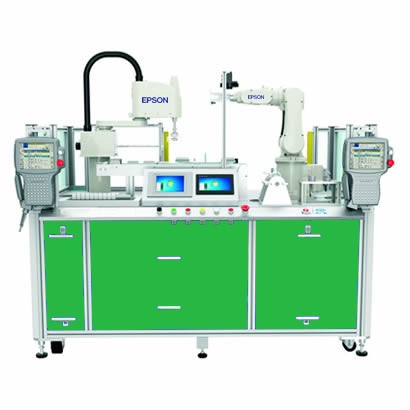
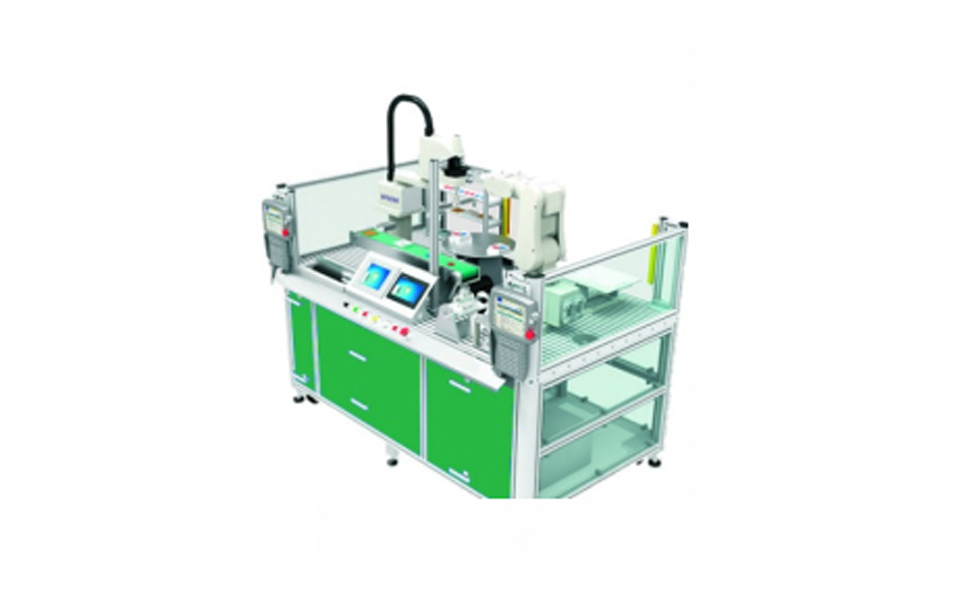
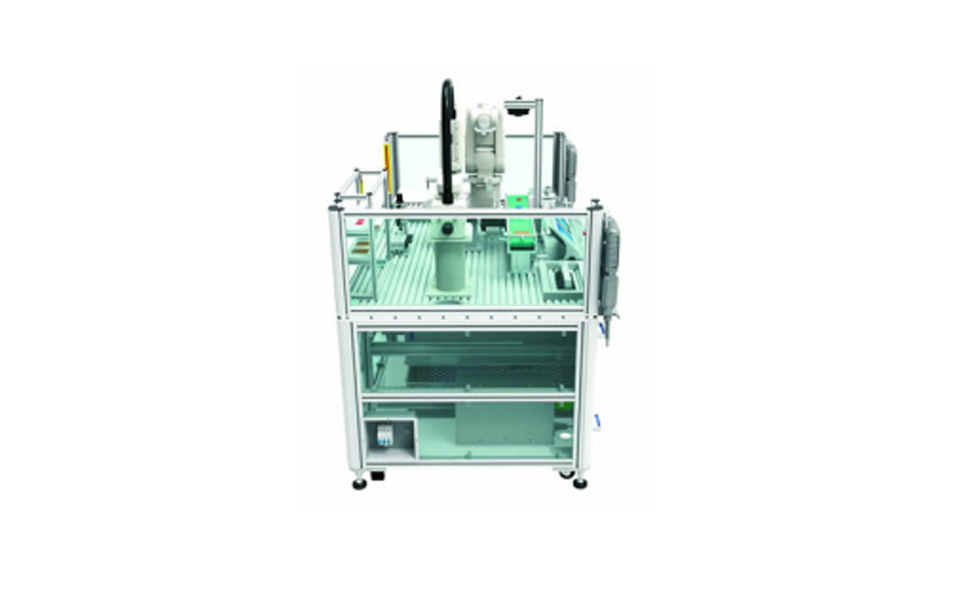
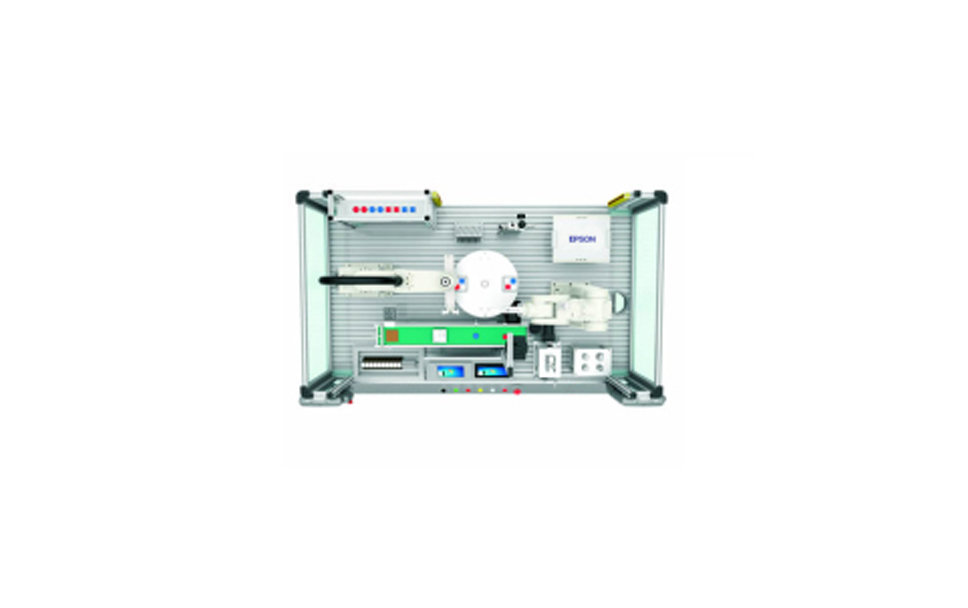
Robotics Education and Training Platform is an innovative educational teaching equipment based on modular design. This platform integrates advanced technologies such as robotics, mechanical design, electrical control, PLC applications, CCD vision, and human-machine interfaces. It primarily trains students in robot operation and programming, and mastering the comprehensive application of mechanical design, pneumatic control, sensors, PLC and electrical control, machine vision, etc. The platform is suitable for practical training in vocational schools and higher vocational institutions, and can also serve as a basic training project for application-oriented undergraduate colleges.
System Composition:
The main body of the robotics teaching platform includes essential or optional modules such as a storage bin module, robot module, turntable module, gripper module, visual inspection module, sorting module, tray conveying module, belt conveyor module, and system master control workstation.
Storage Bin Module – Realistically simulates a multi-station rotary lifting storage platform for disc-type and plate-type workpieces (e.g., gears, shaft sleeves) in industrial applications. Optional and interchangeable bin types are available, with feeding methods adopting various forms used in industry, allowing students to better understand industrial applications and learn more comprehensively.
Robot Module – Six-axis articulated robot or four-axis robot.
Turntable Module – Stepper motor + turntable; simulates multi-station motion and control in industrial applications.
Gripper Module – Two-finger cylinder, three-finger cylinder, suction cup gripper, and other industrial grippers for various workpieces. The type of gripper can be selected based on workpiece characteristics.
Visual Inspection Module – Industrial CCD for detecting and judging the appearance, dimensions, color, etc., of workpieces.
Sorting Module – Sorting channels that sort workpieces based on visual inspection criteria and place them into respective sorting channels.
Belt Conveyor Module – Uses a belt conveyor with baffles for precise feeding and positioning. The robot places finished products onto the conveyor line, simulating the workpiece palletizing application in industrial settings. Feeding methods adopt various forms used in industry, allowing students to better understand industrial applications and learn more comprehensively.
Shenzhen Pilot Smart Automation Co., Ltd. has always been committed to the field of educational training equipment. Upholding the R&D philosophy of "professionalism, innovation, practicality, and guidance," and adhering to a modular, high-simulation design concept, the company develops industrial robotics education and training systems oriented towards case-based teaching. These systems cover different application areas such as mechanical transmission, transportation, handling, assembly, visual positioning guidance, and electrical design and PLC control, perfectly integrating teaching with practice. They aim to cultivate students' professional competence and practical skills in a targeted manner, supporting the construction of industrial robotics specialty training platforms in universities and vocational institutions across the country.